The death of the greatest leader of Iran
The air in Tehran on the night of February 28, 2026, carried a heavy, electric stillness, the kind that precedes a tectonic shift in history. Deep within the fortified heart of the “Beit Rahbari” compound, Ayatollah Ali Khamenei sat in a high-stakes council. He was surrounded by his most trusted shadows—General Mohammad Pakpour of the Revolutionary Guard, security advisor Ali Shamkhani, and members of his own family, including his daughter and granddaughter. They were discussing the survival of the Islamic Republic, unaware that the sky above them had already been mapped for their exit.
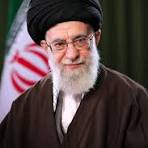
Across the Mediterranean and in command centers half a world away, digital eyes were locked onto a single coordinate. Through a coordinated “decapitation strike” launched by United States and Israeli forces, the invisible geometry of modern warfare was set in motion. Guided by high-fidelity intelligence that allegedly tracked the Supreme Leader’s exact location within the bunker, the munitions were released.
The strike was not a chaotic carpet-bombing but a surgical erasure. At approximately midnight, the ground in central Tehran groaned. A series of precision-guided explosions pierced the reinforced concrete of the leadership compound, collapsing the nerve center of the regime in a matter of seconds. The “Sun of the Revolution,” as he was often called by his followers, vanished amidst the smoke and the settling dust of his own stronghold.
When the sun rose on March 1st, the usual bustle of the capital was replaced by a haunting vacuum. State television, typically a megaphone for the Leader’s decrees, fell silent before broadcasting somber Quranic recitations against a stark black backdrop. By mid-morning, the official word finally broke: the Supreme Leader was dead, alongside his kin and his top lieutenants.
Outside, the streets became a theater of clashing realities. In Enghelab Square, thousands of loyalists dressed in black converged, their cries of grief mixing with defiant, rhythmic chants. Yet, in the quiet residential districts and across the digital landscape, a different story unfolded—one of whispered hope and clandestine celebrations.
As the government declared 40 days of mourning and an interim council scrambled to hold the reins of power, the world watched the rising smoke over Tehran. It was more than just the end of a man; it was the sudden, violent closing of a chapter that had defined the Middle East for over three decades, leaving an entire nation standing on the edge of an uncertain dawn.

My Late Father Left Me a House, but the Woman Living There Revealed a Secret That Changed Everything — Story of the Day

My Husband Refused to Buy Our Son a $20 Winter Coat, Saying We Were ‘Broke’ – When I Found Out the Real Reason, My Knees Went Weak